
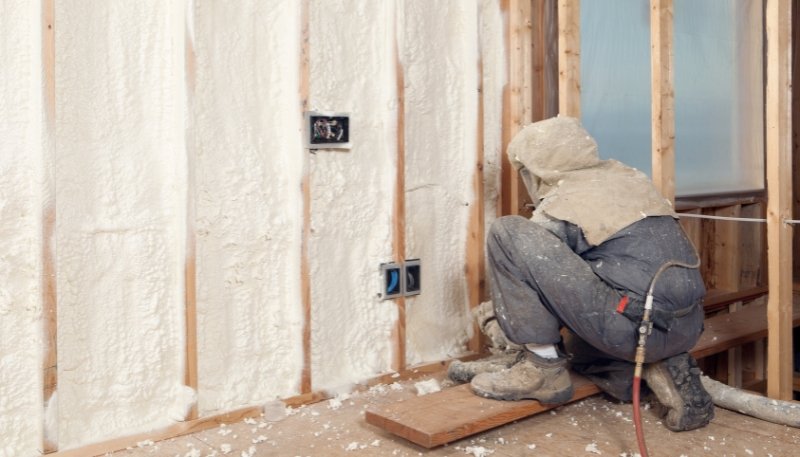
Do mice eat spray foam insulation, or can it actually keep them out? It’s a common question from homeowners trying to insulate and protect their property. While spray foam is excellent for sealing air leaks and improving energy efficiency, it does not act as a standalone rodent barrier. Mice won’t eat it, but they can chew through it. That’s why proper exclusion methods are essential if you want to keep rodents out for good.
In this article, we explain how spray foam interacts with rodent behavior and what the experts recommend for long-term protection.
Key Takeaways
- Mice do not eat spray foam insulation but will chew through it to reach food, warmth, or shelter.
- Spray foam alone won’t stop mice and should not be used as the only rodent barrier.
- Closed-cell foam is more resistant than open-cell but still penetrable to rodents.
- Rodent-resistant foams help, but none are chew-proof without physical reinforcement.
- Steel mesh or copper wool behind foam is essential for effective exclusion.
- Never seal over active infestations without first removing rodents.
- Professional pest control is key for lasting protection and proper sealing.
Table of Contents
What Is Spray Foam Insulation?
Spray foam is an expanding insulation material used to seal air leaks in walls, attics, basements, and crawl spaces. It comes in two forms:
- Open-cell: softer and more flexible
- Closed-cell: denser and more resistant to moisture
The primary benefit of spray foam is its ability to fill small cracks and prevent air leaks. It also provides moderate soundproofing and improved thermal performance. However, it is not designed as a rodent deterrent.
Do Mice Eat Spray Foam?
No. Mice do not consume spray foam as food. The material provides no nutritional value and is not attractive to rodents in that way.
However, mice can and do chew through spray foam to create access points or pathways to food and nesting areas. They chew to control tooth growth and to reach warmer, sheltered spaces.
Foam becomes a barrier they remove, not a food they are drawn to.
Can Spray Foam Insulation Keep Mice Out?
Spray foam can help reduce the number of entry points available to rodents by sealing gaps and cracks. But it is not rodent-proof.
If a mouse is motivated by food scent, heat, or nesting material behind a wall, it will attempt to chew through almost any material, including dense foam.
Spray foam may slow rodents down or conceal openings temporarily. It cannot stop them entirely without reinforcement.
Why Do Mice Chew Through Insulation?

Rodents chew through various building materials for several reasons:
- To keep their teeth filed
- To reach a heat source or shelter
- To access food or nesting areas
- To widen an opening that already exists
Spray foam is relatively soft compared to metal or concrete. This makes it easy for rodents to breach once they start.
Is Pest-Resistant Foam Effective?
Some products are labeled as pest-resistant or rodent-blocking. These include bitter agents that discourage chewing. However, no foam is chew-proof.
The most effective use of pest-resistant foam is in combination with:
- Steel mesh or hardware cloth
- Copper wool backing
- Caulking around utility lines
- Concrete or masonry in foundational gaps
Relying on foam alone does not provide a long-term solution.
Where Mice Commonly Target Foam
Rodents often chew through insulation in these places:
- Around plumbing and HVAC lines
- Crawl space vents
- Garage corners
- Attic eaves and gable ends
- Basement sill plates
Gaps in these areas can lead directly into conditioned living spaces. Spray foam can help, but reinforcement is usually needed.
Best Practices for Rodent-Proof Insulation
If you plan to use spray foam as part of a rodent prevention strategy, follow these steps:
- Inspect all potential access points before applying any material
- Use stainless steel mesh or copper wool to backfill medium gaps
- Apply closed-cell foam to create an airtight seal
- Monitor foam-sealed areas seasonally for signs of chewing or damage
- Avoid using foam to seal active rodent paths without first removing the animals
Foam should never be applied over an active infestation.
What to Do if Mice Are Already in the Home
If you suspect rodents are already present, sealing entry points with foam could make the problem worse. It may trap rodents inside walls, which can lead to secondary problems like odor or decay.
In this case, professional pest removal is the first step. After the animals are removed and the area is cleaned, foam and other exclusion materials can be installed.
You can learn more about professional rodent exclusion here: